

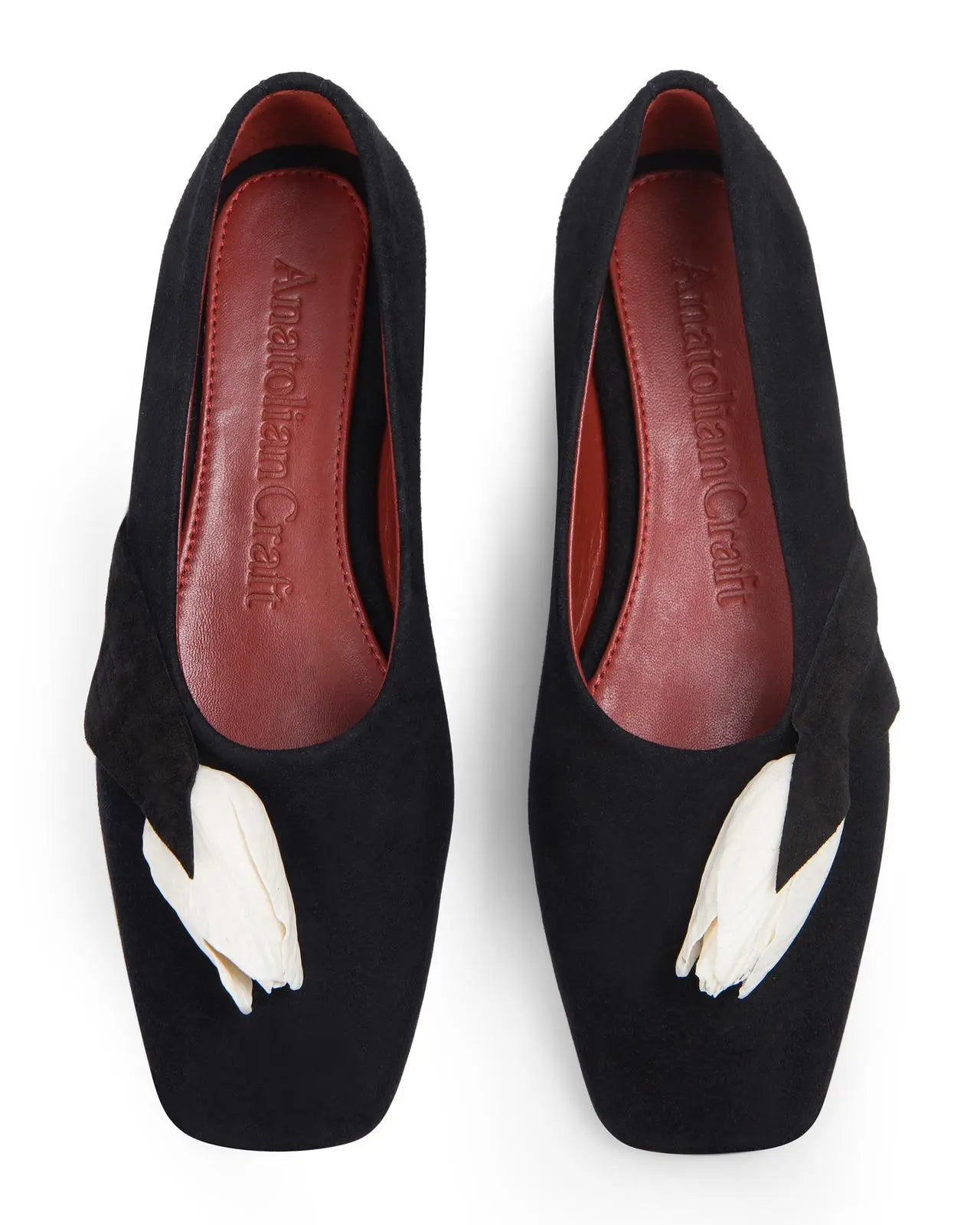
The Language of Wearable Art
Wearable art lives somewhere between craftsmanship and expression. It exists in the space where an object moves beyond function and begins to carry artistic intent.
At AnatolianCraft, wearable art often begins with ornament. Embroidery, sculptural embellishments, and hand-formed floral elements slowly build surfaces that feel both delicate and dimensional. These decorative elements do not simply sit on top of the material. They shape the visual language of the object itself.
Many of these techniques are rooted in long-standing decorative craft traditions. Embroidery stitches accumulate thread by thread, while sculptural embellishments introduce texture and depth. Hand-formed floral elements add a sense of movement, transforming flat textiles into surfaces that feel almost architectural.
Such techniques require time. They depend on patience, precision, and the quiet rhythm of skilled hands working through detailed processes. The result is not merely decoration, but a surface shaped through craft knowledge that has developed over generations.
Within the creative vision of the house, these traditional techniques are reinterpreted through contemporary design. Materials are chosen to support the dimensional qualities of the ornament, allowing embellishment, embroidery, and textile structure to work together as a unified form.
In this way, wearable art becomes less about decoration and more about transformation. Textiles become sculptural surfaces. Ornament becomes structure. Craft becomes visible.
What ultimately remains is the presence of the hand — the quiet trace of craftsmanship embedded within the object.
